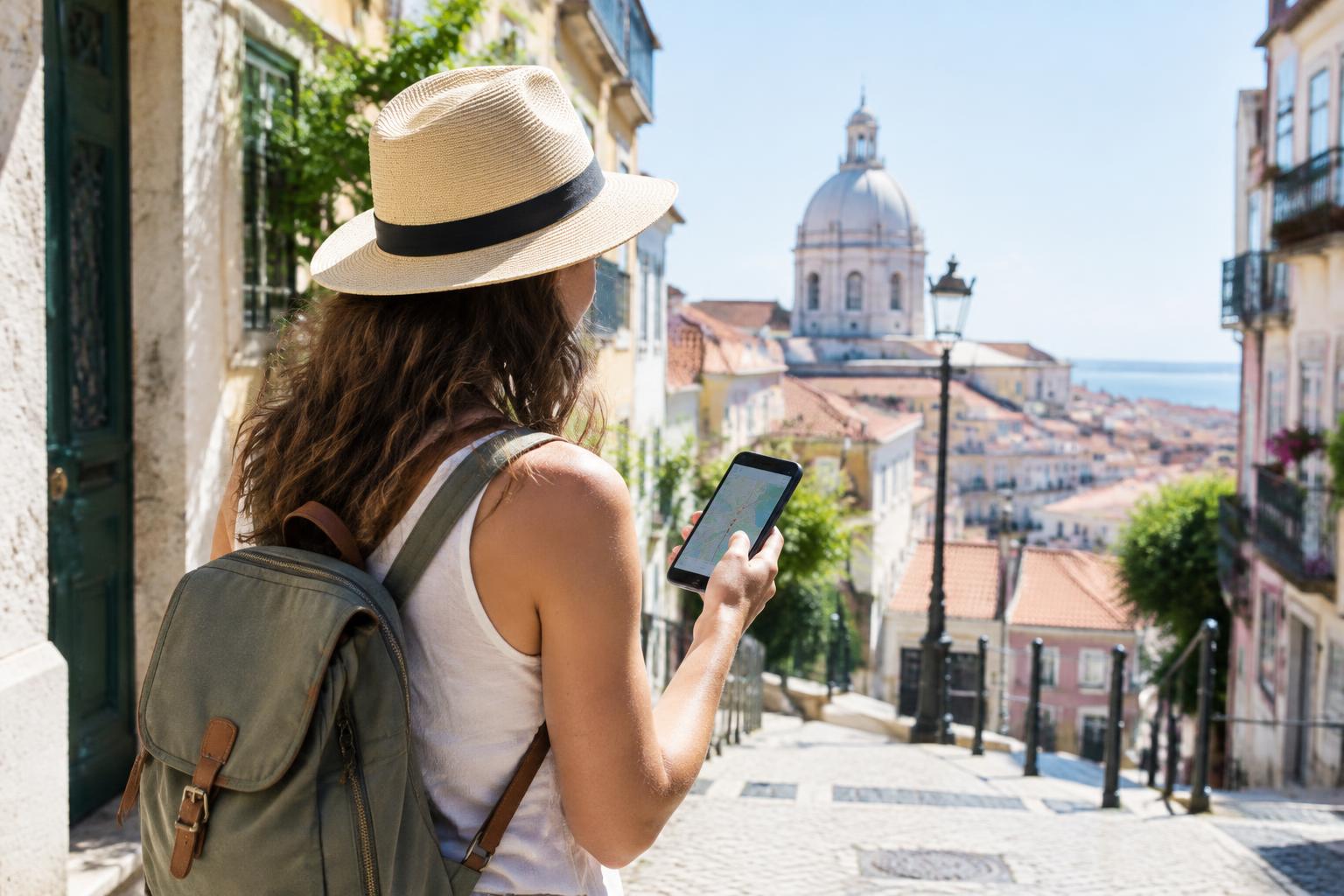
Your three options
Roaming, a local SIM, and an eSIM all give you data abroad. The right one depends on how long you stay, how many countries you visit, and whether you need a local phone number.
International roaming
Roaming means using your home plan abroad. Nothing changes on your phone, and you keep your number for calls and texts. Check with your carrier before you go. Some plans include roaming, some add a daily charge, and some limit your data. Ask what is included so there are no surprises on your bill.
Local SIM card
A local SIM is a physical card you buy in your destination, often at the airport or a phone shop. It can be good value for a long stay in one country. The downsides are finding a shop when you land, showing ID or a passport in some countries, and getting a new phone number. If your phone has only one SIM slot, your home SIM comes out while the local one is in, so keep it somewhere safe.
Travel eSIM
A travel eSIM is a digital SIM. You install it with a QR code or an app, so there is no card to swap, and you can set it up before you leave. Most travel eSIMs are prepaid and data only, which means no calls, texts, or local number. Your phone must support eSIM and be unlocked. Airalo and Saily are two services that sell travel eSIMs.
How to choose
- A short trip to one or more countries: a travel eSIM is often the simplest, because you can pick a plan for one country or a region.
- A long stay in one country: compare a local SIM and an eSIM, because a local SIM can be good value over a longer time.
- You need a local number for calls or deliveries: a local SIM, or a plan that includes a number, is the better fit.
- You want nothing to change: check your home plan's roaming rules first.
Before you leave
Check that your phone supports eSIM and is unlocked. Look in your phone's settings or ask your carrier. Install your eSIM on WiFi before you leave, because installing needs an internet connection. Download offline maps and save your hotel address. If you use an eSIM for data, turn off data roaming on your home line so your home carrier does not charge you. Check your phone's settings to choose which line uses data.
Keeping your home number
Keep your regular SIM in your phone so your home number still works. Use WhatsApp, FaceTime, or similar apps for calls and messages over data. Some banks and accounts send verification codes by text to your home number. Before you travel, check how you will get those codes, and switch to an authenticator app where you can.
Services worth considering
Use the buttons below to sign up, or read the full article first to see the benefits and the things to know before you start.

Airalo
Land with mobile data already working.

Saily
Get mobile data abroad with an eSIM that includes built-in privacy tools.
Gear that helps
Universal Travel Adapter, 25W PD, USB C and USB A
Why It's Worth Considering
One adapter that works with different outlet types can save space and replace several single-country plugs. It is one of those small accessories that makes charging much easier abroad. An adapter changes the plug shape, not the voltage, so check that your devices support the local voltage.
Key Benefits
- Designed for different international outlet types.
- Includes USB C and USB A charging ports.
- Supports compatible fast-charging devices.
- Reduces the need to pack multiple adapters.
- Convenient for charging phones, tablets, and other electronics.
Best for: International travelers visiting multiple countries.
INIU 10,000mAh 45W Fast Charging Portable Charger
Why It's Worth Considering
Its compact size is the main appeal. Extra battery power is useful on travel days, and this one is small enough to fit in a backpack, carry-on, or even a pocket without adding bulk. Power banks usually must go in your carry-on, so check your airline's current battery rules.
Key Benefits
- Compact design that is easy to carry.
- 45W fast charging for compatible devices.
- 10,000mAh capacity for extra power while traveling.
- Convenient for airports, sightseeing, and long travel days.
Best for: Travelers who want backup battery power without carrying extra bulk.
Travel Cable Organizer Bag
A compact organizer for keeping charging cables and small electronic accessories together.
View on AmazonThe takeaway
Pick the option that fits your trip, set it up before you leave, and keep your home number reachable. Then you can land with data ready, and your first hours are easier.
This guide is based on listings and research. I have not tested products unless I say so.
You might also like
How to Handle Money While Traveling Abroad
Practical ways to avoid extra fees abroad, from foreign transaction fees and ATMs to paying in the local currency.
Read the guide
Credit Card Safety While Traveling: How to Protect Your Money Overseas
Protect your money overseas with simple steps before you leave and while you travel.
Read the guide
Renting a Scooter or Car Abroad: What to Check First
Check the rules, insurance, and vehicle before you rent a scooter or car abroad.
Read the guide