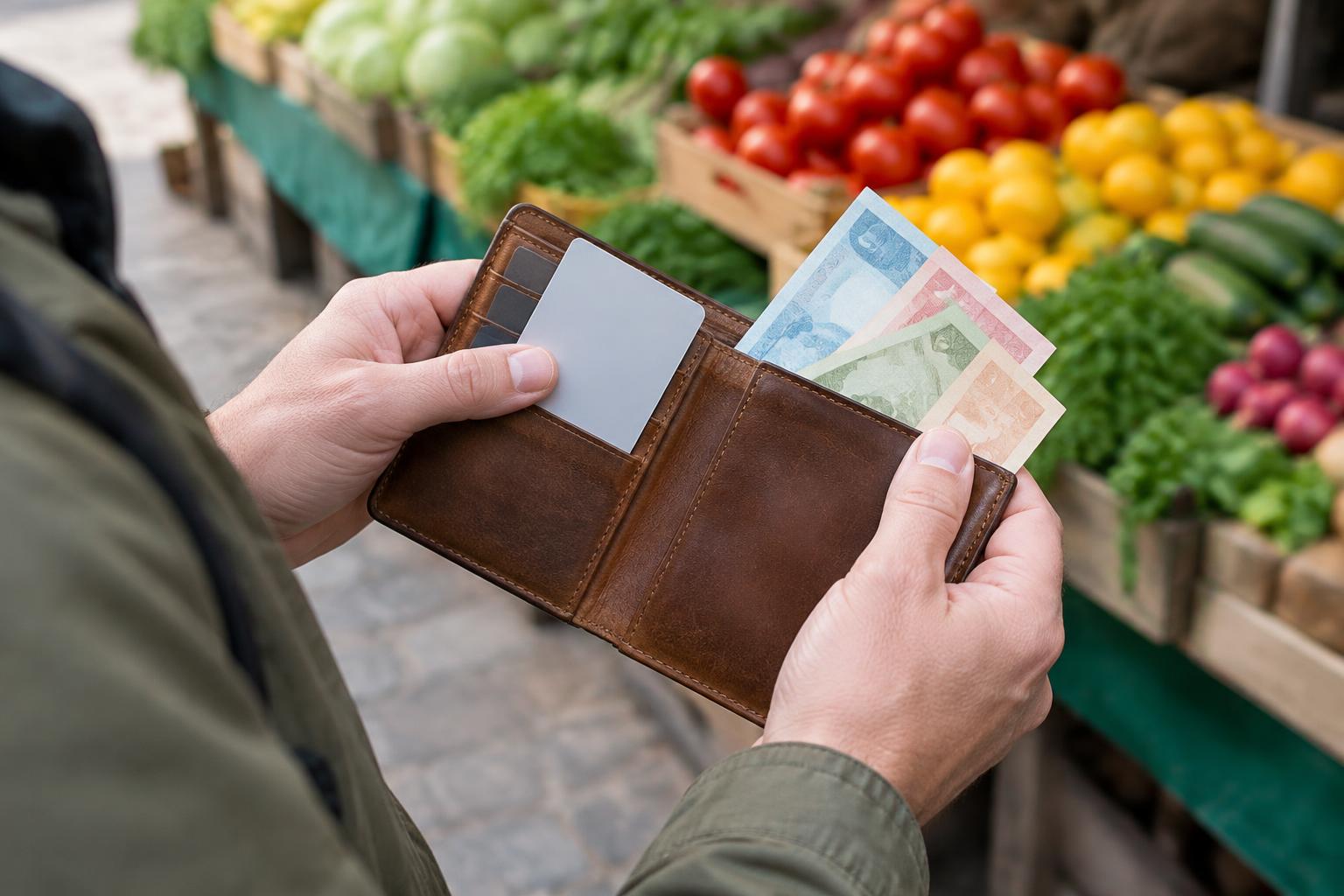
Check your cards before you go
Check whether each of your cards charges a foreign transaction fee. This is often a percentage of each purchase, and it can add up on a longer trip. Check your bank's fees and limits for ATM withdrawals abroad, and ask your bank whether you need to tell it about your travel. Bring more than one card, and keep them in different places.
Pay in the local currency
Some card machines and ATMs offer to charge you in your home currency. This is called dynamic currency conversion, and it often costs more because it uses a less favorable exchange rate. When you are asked, choose the local currency, and let your bank or card network do the conversion. Check the rate and fees on the screen before you confirm.
Choose your ATMs carefully
Use a bank-operated ATM instead of an independent machine, especially in airports, hotels, and busy tourist areas. Each withdrawal can carry fees from the ATM and from your own bank, so check your bank's rules first. Avoid carrying too much cash at once.
Skip airport currency exchange
Airport exchange counters often give weaker rates and may add fees. If you need cash when you land, take out a small amount from a bank-operated ATM, or ask your bank about ordering currency before your trip.
Avoid cash advances on credit cards
A cash advance on a credit card usually starts charging interest right away and comes with a fee. A withdrawal with a debit card is often cheaper, but check your bank's terms.
Carry a mix of payment methods
Carry a card with low or no foreign transaction fees, a backup card, and a small amount of local cash for transit, tips, and places that do not take cards. Keep your backup cash and backup card separate from your main wallet.
A multi-currency option
Some travelers use a multi-currency account. Wise lets you send, spend, and hold money in more than one currency. It shows the exchange rate and fee before you pay, and it offers a debit card for spending abroad. Features, fees, and availability depend on your country, so check Wise before you sign up. It is one option to compare with your bank.
Services worth considering
Use the buttons below to sign up, or read the full article first to see the benefits and the things to know before you start.

Wise
Send, spend, and hold money abroad at the real exchange rate.
New users get a free Wise card when they sign up through this link. Terms depend on your country.
The takeaway
Before you go, check your card fees and ATM rules. While you travel, pay in the local currency, use bank ATMs, and keep a backup. These small choices help you avoid fees that are easy to miss.
This guide is based on research. It is general information, not financial advice.
You might also like
How to Stay Connected Abroad: eSIM, Local SIM, or Roaming
Compare roaming, local SIM cards, and travel eSIMs, and learn how to choose and set up the right option before your trip.
Read the guide
Credit Card Safety While Traveling: How to Protect Your Money Overseas
Protect your money overseas with simple steps before you leave and while you travel.
Read the guide
Renting a Scooter or Car Abroad: What to Check First
Check the rules, insurance, and vehicle before you rent a scooter or car abroad.
Read the guide