Plan for your itinerary, not every possibility
Write down the weather, activities, and laundry options for your trip. Choose clothes that work in several combinations, and plan around the time between washes rather than packing a new outfit for every day. Check your accommodation’s laundry facilities before relying on them.
Lay everything out before it goes into your bag. Remove duplicate items unless there is a clear reason to keep them. A spare charging cable may be useful; three similar jackets may not be.
- Choose versatile layers that suit the expected climate.
- Pack enough underwear for your planned laundry interval, with a small buffer.
- Check your airline’s baggage size and weight allowances, including connecting flights.
Group clothing with or without packing cubes
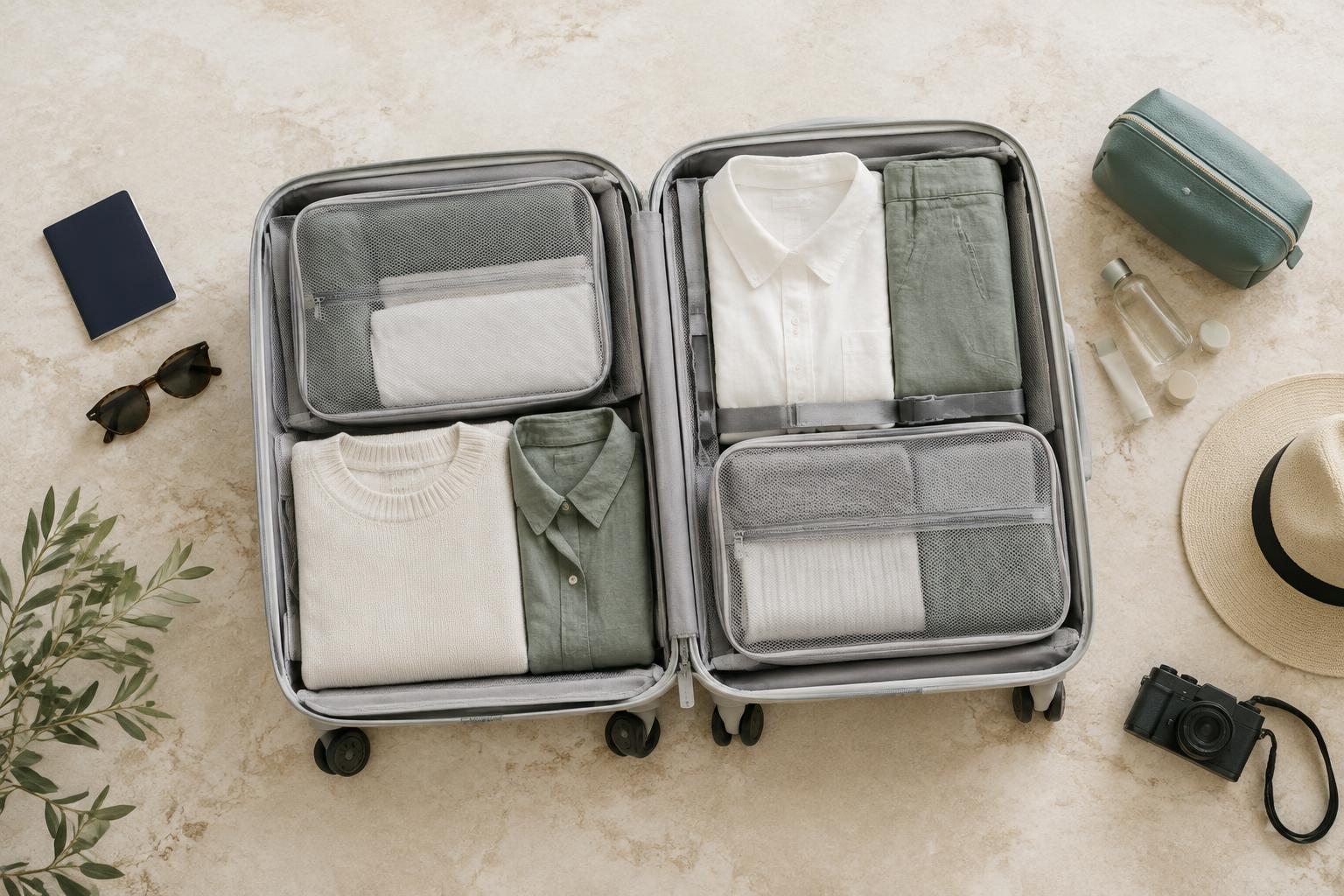
Packing cubes can separate tops, underwear, and sleepwear, or hold outfits for a short stop. Choose sizes that fit your suitcase rather than filling it with bulky organizers. Mesh panels can help you see the contents, while compression zippers may reduce the volume of soft clothing—but they do not reduce its weight.
Packing cubes are optional. You can organize just as well by stacking clothing in categories, using existing fabric bags, or dividing the suitcase into zones. Try that first if you are unsure whether extra products would help.
Keep clean, worn, and damp items separate
Reserve one washable bag for worn clothing. Separate shoes from clothing with an existing shoe bag or a clean reusable bag, and place them near the wheels when practical to keep weight low.
Let damp clothes dry before packing whenever possible. A sealed bag may contain moisture temporarily, but leaving wet items enclosed can lead to unpleasant smells. Keep delicate items away from shoes, hard edges, and liquid containers.
Give small items one place to live
Use a small pouch for adapters and cables, another for toiletries, and a secure case for jewelry or tiny items. Avoid scattering essentials into every pocket: a system you can remember is more useful than a suitcase with dozens of compartments.
Close liquid bottles securely and keep them in a separate, suitable bag. Put items you may need at a stop near the top, not under the entire clothing stack. Keep anything valuable or irreplaceable in your carry-on instead.
Decide what belongs in your carry-on
Travel documents, essential medication, valuables, and the electronics you need should stay with you, subject to applicable security and airline rules. Add a change of clothes and basic permitted toiletries in case checked baggage is delayed.
Power banks and spare lithium batteries generally belong in cabin baggage rather than checked luggage. Capacity limits, approval requirements, and onboard use rules vary: check your airline’s current requirements. If your cabin bag is gate-checked, remove items that must stay in the cabin.
Save space without overpacking
Roll casual, flexible clothing and fold structured pieces. Neither method is best for everything; use the one that fits the fabric and your suitcase. Fill empty shoe space with clean socks inside a small bag, and wear your bulkier appropriate layer during transit if comfortable.
Leave some room for repacking and items picked up along the way. A bag that closes only with force is difficult to manage and can strain its zippers. Weigh the finished suitcase rather than assuming that a neatly packed bag is within the allowance.
- Pack the largest items first, then use the gaps for smaller ones.
- Take only the toiletries needed for the trip, where practical and permitted.
- Do a quick repack at home to check that your system is easy to maintain.
The takeaway
A well-organized suitcase does not require a shopping list. A realistic clothing plan, a few clear categories, and a place for worn items are a strong foundation. Start with those habits, keep essentials with you, and buy an organizer only when it makes your particular trip simpler.