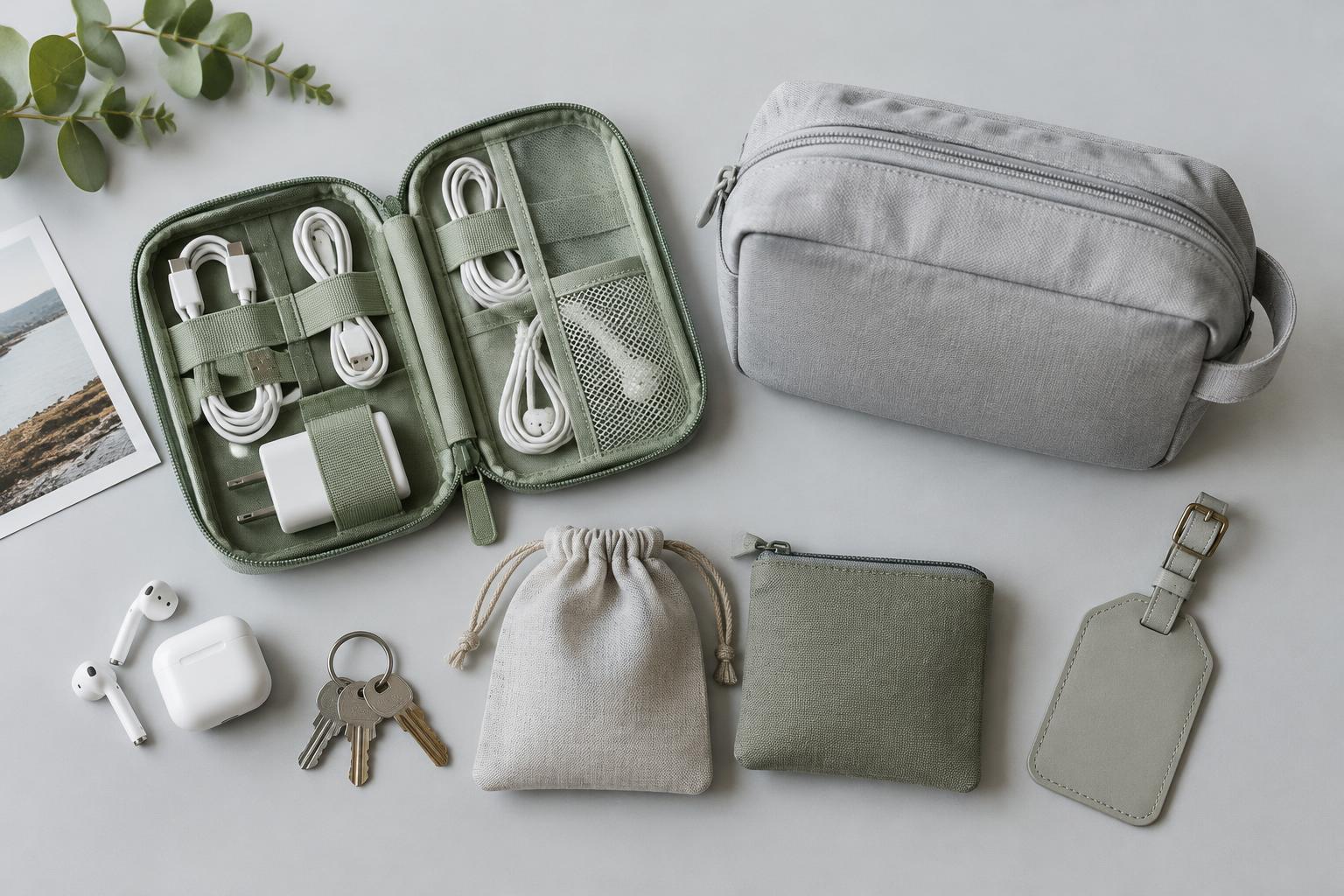
Start with categories, not new products
Gather the accessories you actually use, then group them by task: charging, washing, documents, and everyday small essentials. Remove duplicate adapters, unused cables, and anything you packed for a device you are not taking.
Try an existing zipped pouch or a bag pocket for each group. An organizer is worth considering only if it keeps needed items together without adding unnecessary weight or bulk.
Choose a cable organizer that fits your equipment
Coil cables loosely and secure them with reusable ties you already have. Avoid tight bends at connectors. Keep adapters and chargers together, but separate delicate items from heavy plugs that might scratch them.
Before buying a cable organizer, measure your charger and check pocket depth. Elastic loops should hold cables without squeezing connectors, and the case should still close when loaded. A simple pouch may fit a bulky charger better than a rigid case with too many small slots.
- Check the internal dimensions, not just the external size.
- Look for easy-to-use zippers and compartments you can actually see into.
- Choose light padding if it solves a real protection need; do not assume more padding is always better.
Keep your toiletry bag compact and easy to clean
Choose the smallest toiletry bag that comfortably holds your essentials. Washable or wipe-clean lining can make spills easier to deal with. Check that bottles stand or lie securely and that seams and closures are practical for regular use.
A hanging hook can help in a small bathroom, but it adds little value if you usually have counter space. Water-resistant fabric is not the same as a leakproof bag. Keep liquid containers securely closed and follow the current screening rules for your itinerary.
Use small pouches with clear jobs
Assign one pouch to a task and keep using it that way. For example, put charging equipment in one pouch and earplugs, a sleep mask, and headphones in another. Different colors or a small label can make similar pouches easier to distinguish.
Use a secure small case for jewelry or other tiny items rather than placing them loose in a large bag. Keep everyday essentials easy to reach, but use a securely fastened pocket for valuables and documents. Avoid leaving the whole pouch on a café table or airport seat.
Pick a practical luggage tag
A luggage tag should attach securely and allow a reader to find useful contact information if the bag is misplaced. Consider a covered information panel, a durable strap, and enough room for legible details. A distinctive color may help you recognize your bag, but still confirm the bag is yours before leaving with it.
Use contact details you are comfortable exposing, such as a suitable email address or phone number with country code. Avoid displaying your full home address or passport details. Keep a contact card inside your suitcase too, in case an external tag comes off. A tag helps identify a bag; it does not prevent loss or guarantee recovery.
Create a quick departure check
Give small essentials a fixed home and return them there after use. Before leaving accommodation, check outlets, the bathroom shelf, the bedside area, and any safe you used. Repack charging items together rather than slipping them into the nearest pocket.
At airports or on trains, check the seat pocket, charging outlet, and space around your seat before moving on. A short repeatable check is easier to maintain than relying on memory when you are tired or in a hurry.
- Use a simple list: documents, phone, wallet, keys, medication, and charging kit.
- Check that every pouch is closed before placing it back in your bag.
- Review the setup after the trip and remove organizers or accessories you did not need.
The takeaway
Good organization comes from repeatable habits, not the number of pockets you own. Give each group of essentials a clear home, choose products by their fit and practical features, and do a brief check before every departure. Buy less, carry what helps, and keep the system simple enough to use when you are tired.